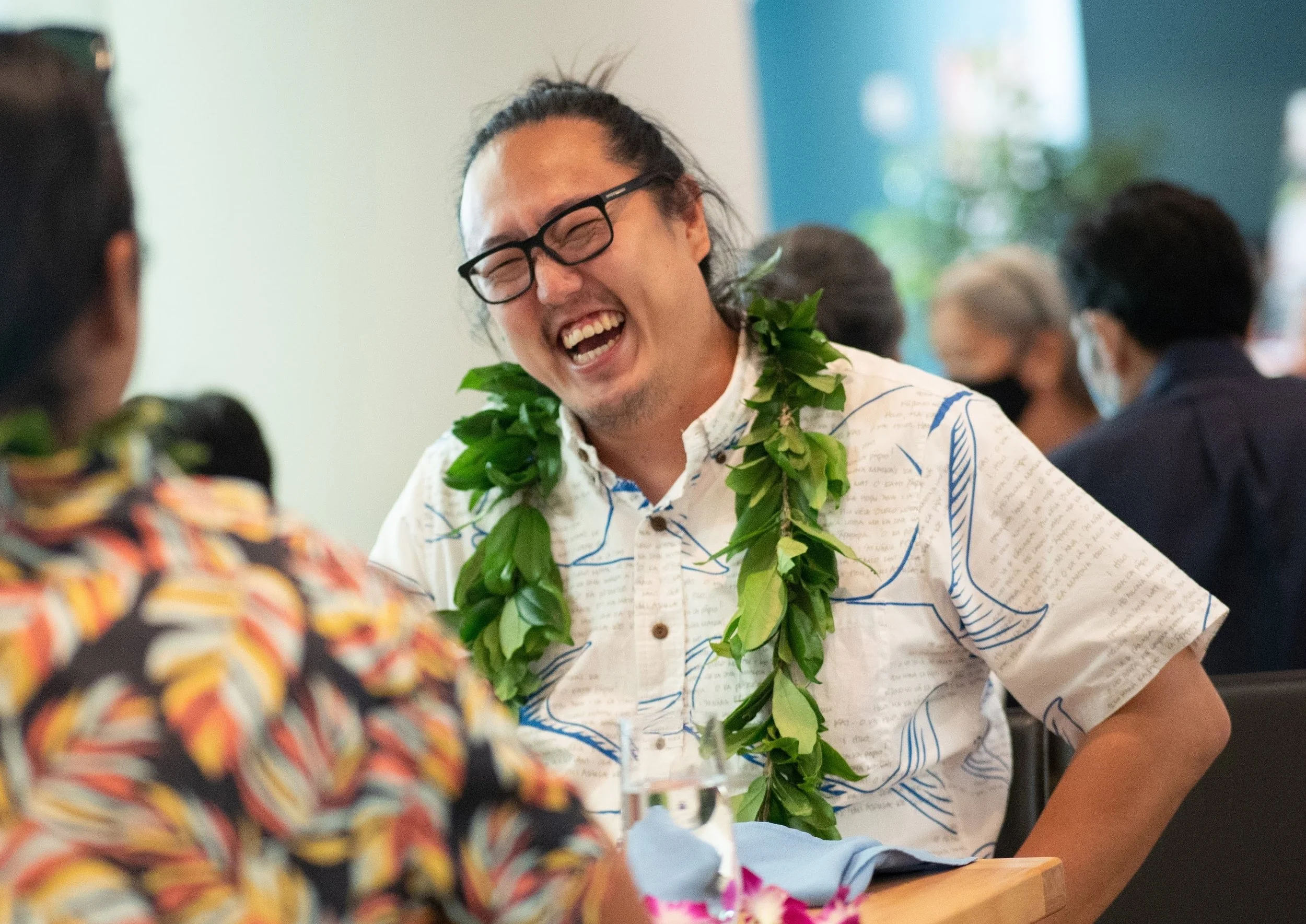
Mike Pak
The Pandemic
Part 1: Excavation of Memory
It wasn’t the Spanish flu, his infection;
the old man, who needed just a well-lighted place
to read yesterday’s news, breathed heavy
under a lifeless fluorescent flicker.
He remembered a poem he had written
travelling across the country by train and rain,
“Driving and driving on threadless tires
this old man cannot see the street signs;
things blur in parts; the past cannot remain.”
But surely there was more; somewhere, sometime,
between a patch of wild grass, or in the eyes,
a memory from a dark night of insomnia
was twitching in a cold mirror.
“Now,” he decided, “is no different from then.”
His hair continued to grow like vines
unbothered by the sun’s heat or the moon’s feet.
The city burned, just like the countryside,
as the air, yellowed with photographs of war,
smelled and tasted of consumption.
“Yes,” he thought, “the more things fall apart,
the more they continue to be the same;
that’s what Jean-Paul Sartre said,”
he coughed a dry cough, emotionless
as a dried-out fountain pen or goose’s quill;
“Yes,” he reminded, “it is absurd;
after all, we’re only ordinary men;
who knows which is which and who is who?”
Part 2: Games of the Past
Between us and them, they are one person;
helplessly hoping, they are too alone;
hopelessly helping, they are three together;
yet, are they, are they for each other?
For every man with a holding role, and
for every man in turned facades, they scream
to break unarticulated silences.
“Was it Civitavecchia in 1944,
or Associazione Calcio Milan in 1990,”
he brooded, alone but not by himself.
His father died and left him this house,
a pomelo tree and an avocado tree stand
guard in front, while another tree
stands tall in back; the large fruit
rot in yards of weeds with rat bore holes
and roaches under the soft underbellies.
“Why are they called ‘morning glories?’”
He wondered, “I thought some of them bloom
at night.” He had always liked that flower;
its purple delicate flowers, tiptoeing over
the green stems and leaves, which his mother
cooked during those leaner days.
“Was life better when the struggle was much
simpler? Was it bad to love and admire
the man with no name?” He dug into
his ugly pockets; nothing, not a point
of lint tucked in the tip of his pocket,
not an unraveled thread to find.
Part 3: Mountain Sermon
Autumnal repose blows in the air, yet
it is still, warm still; the taste of saury
on a bowl of fresh rice reassures
and warms the heart for winter’s roots.
Deep in a mountain’s valley, circular ruins
wait for someone who may not exist,
and a young gray cat has fallen asleep
beside a few fruit trees. Men have walked
past these stone ruins, taking individual
stones to remember the ruins, the valley,
the mountains; but the stones are
the mountains, and when these men remember,
they fold their memories into neat squares
that fit sharply in ironed dress shirts,
and come and go, talking of the fantastical.
The stones, they are proof of life, no?
They exist, and they will last, will they not?
The circular ruins will disappear one day,
but so too will those mountains.
Part 4: West of Water
Speech piles like the autumnal leaves
only to rot under the snow;
but even underground, you can hear
water flowing, those ancient rivers.
Stop, and listen!
Part 5: What the Doctor Said
The TV felt like a blue black-and-white set,
despite news of fires and the tropical rainforest
burning; the old man remembered that
odd fungus, inhabiting the bodies of jungle ants,
impelling the soldiers to climb overgrown vines
and die in dark green canopies. What if
that madness, that fungal infestation,
was love? Could such overflowing emotions
create inspiration? The doctor had difficulty
with his words, but he could breathe fine;
If only this hospital had better air, he thought,
as the doctor linked inflammation to
lack of oxygen, to more inflammation,
to organ failure; “Things fall apart,”
he mouthed, and began to chuckle.
The doctor smiled; it was good to have high spirits
in such low times, to have hope;
the old man shook his head; “No, I do not
have hope. I do not expect good things to come.
But I can still dream as long as I live.”
As the doctor left, the old man remembered
that last stanza he had written, on a train
from Seattle to San Francisco: “but now I know
that generations of sleeping stones
lie waiting below the valley’s weeds,
and what shiny star, its hour approaching dawn,
smiles towards the ocean to be born?”
Ghosts
Night still stinks through the alleys winding Jongno at 4 a.m.
Empty cans, cigarette butts, tired old men in rusty trucks.
New buildings, trendy restaurants, in the layers of old Seoul.
The People (Gyeongbokgung)
Joseon kings in a portrait of five mountains, the sun and moon.
Today too, their royal robes still embellish and write the past.
Know where your kings have hidden us: in the mountains, in the stars.
Teahouse
Drinking tea in a garden. Look! Bugaksan stands over us.
Tourists bustling in Bukchon life drown the summer cicada cries.
Is this noise our remembered past? Do these walked bricks lie proudly?
Beautiful Geumgangsan
Twelve thousand erudite peaks, glazed on porcelain, soft celadon.
Hwang Jini drowned in waters of mountains worn yet unchanging.
Whose mountains are this beautiful, in today’s heat, in smooth clay?
Rain
Jangma hangs and blankets Seoul, city people inconvenienced,
wet socks at Dongmyo market and train delays at Seoul Station.
In Osong, when the country floods, many people lose their lives.
Busan
Steaming hot dwaeji gukbap nourished and fed our refugees.
This city of seas and hills shelters our wildflowers.
Pak Jong-chul’s powerful silence fills fish markets every day.
Sinchon (2004, 2023)
Twenty years can pass on horseback, riding alone to buy some shoes.
Magpies cleave the hushed spaces of deep slumber, of you and me.
Who am I? Who was I before? What is matter? Never mind.
Hongdae
Hongdae nights: a carnival full of white masks and makgeolli.
Like Joseon’s marching armies, seeking freedom with measured steps.
Feeling trapped, bound within mirrors, electric dreams, and green joy.
The Gift
How much of this Kaneohe sky
do I really know?
What are the names of these clouds and these stars?
I don't know.
But I know, I've always known,
in joy and in pain,
I've looked up to the skies.
There are songs undocumented,
some lost to be found.
Perhaps that's the gift.
How much of this Kaneohe Bay
do I really know?
Can we clean the brackish waters?
I don't know.
But I know, I've always known,
from the mountain rain to deep seas,
the ocean is never still.
There are stories untold,
but history continues to write.
Perhaps that's the gift.
How much of Kaneohe's people
do I really know?
Who laughs, who cries, who lives?
I don't know.
But I know, I've always known,
when there is celebration,
it is loud; there is noise.
Someday, before I leave,
I hope to understand.
Perhaps that's the gift.
Mike Pak was born and raised in Kāneʻohe, HI. His scholarly work has been published in Amerasia, Composition Forum, and Double Helix: A Journal of Critical Thinking and Writing. He supports Arsenal Football Club and currently teaches at the University of Hawai‘i – West Oʻahu.
|